Natural Beauty in Assam

Thursday, 16 June 2016

Flora in Kaziranga


The flora in Kaziranga National Park chiefly constitute of three major types: alluvial inundated grasslands comprising of tall thickets of elephant grass and short grasses, tropical wet evergreen forests and tropical semi-evergreen forests. But, the main characteristics of flora in Kaziranga are the dense and tall elephant grass intermixed by small swamplands left behind by the receding floodwaters of the river Brahmaputra.
In addition to grasses and forests, the swamps of Kaziranga National Park have an abundant cover of water lilies, water hyacinth and lotus, providing a beautiful look to the surroundings of the park. Rattan Cane, which is a type of climbing palm, also adds to the natural beauty of Kaziranga National Park. According to a Landsat data for 1986, the different vegetation coverage in Kaziranga National Park is as follows: Tall thickets of elephant grasses 41%, short grasses 11%, open jungle 29%, rivers and water bodies 8%, sand 6% and swamps 4%.

মানস ৰাষ্ট্ৰীয় উদ্যান


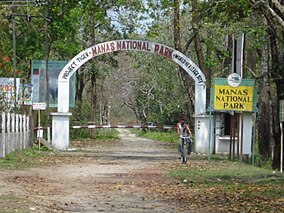
Main entrance of Manas National Park


Manas WS


Location

Assam, India


Nearest city

Barpeta Road


Coordinates

26°43′N 90°56′ECoordinates: 26°43′N 90°56′E


Area

950 km2.


Established

1990


Visitors

NA (in NA)


Governing body

Ministry of Environment and Forests, Government of India


Website

http://www.manasassam.org


UNESCO World Heritage Site


Type

Natural


Criteria

vii, ix, x


Designated

1985 (9th session)


Reference no.

338


State Party

India


Region

Asia-Pacific


Endangered

1992–2011

Wednesday, 15 June 2016


10 Really Weird Crow Facts


In our last top ten fact list about Crows we highlighted corvids from a scientific angle – they are intelligent, persistent, prolific, and hardy. In this list, we want to explore some of the stranger things about our favorite critter. Without further ado:


Crows living in suburban areas require only 10% of the nesting territory that crows living in in the wilderness do, and are much more tolerant of range overlap. They also will build fake nests to fool predators.


Dubbed ‘Anting’ by John Marzluff, crows will crush an ant and rub it all over themselves like perfume! The Formic Acid in the ants helps ward off parasites.


Image of a Black Drongo 'Anting'


Pet crows give their owners names. This is identified by a unique sound they make around specific people that they would not otherwise make.


Female Crows mate for life, but males will cheat, which explains the next one:


Male crows have no penis. Their sperm is transferred from their cloaca to the female cloaca and copulation only lasts 15 seconds. Its a wonder the females are so loyal!

[yt]mn0M5ZnB8QE[/yt]


Crows can count to six!


Crows sunbathe for Vitamin D.


Odin the Crow Sunbathing


Healthy crows help crippled crows but they have a dark side. Crows occasionally murder each other for reasons that mystify scientists.


Crows have been observed chasing sparrows into buildings in order to stun them. The result is sparrow for lunch. Don’t worry, they pick on birds their own size – mobbing crows can seriously injure hawks. Scientists suspect an eagle was even killed by mobbing crows.


Crows have been reported to eat over 1000 food items, including insects, worms, berries, birds eggs and nestlings, small mammals, bats, fish, snakes, frogs, salamanders, animal dung, grain, nuts, carrion, fried chicken, hamburgers, Chinese food, french fries, and human vomit. They can be weirdly picky though – an experiment showed crows prefer French fries in a McDonald’s bag over those in a brown paper bag. To top it off, a nestling can eat 100 grasshoppers in 3 hours.


10 Really Weird Crow Facts


Peacock...


The peacock (also known as peafowl) is a medium sizedbird most closely related to the pheasant. Unlike it's common pheasant cousin that inhabits areas of the Northern Hemisphere, the peacock is found in warmer climate of the Southern Hemisphere, with the peacock being most commonly found in India.

There are three main types of peacock, the African Congo peacock, the Indian peacock and the Green peacock all of which are thought to have originated in Asia but are today found in Africa and parts of Australia. All of the three different species of peacock are knwon for their elaborate male peacocks and dull, brown female peacocks (in comparison to the males).

The male peacock is most well known for it's enormous tail feathers that fan out behind the peacock and can be nearly two meters in length. This colourful display of the peacock is thought to be used for both mating and defence purposes. The male peacock attracts a female to mate with by showing off his array of elaborate feathers, and when the male peacock feels threatened, he will fan his tail out in order to make himself look bigger and therefore try to intimidate approaching predators.

The peacock is an omnivorous bird and feeds on insects, plants, seeds, and flower heads. Peacocks have also been known to munch on small mammals and reptiles in order to supplement their diet, which ensures that they are getting the right nutrients. Peacocks have a number of natural predators in the wild that include wild dogs and cats, medium sizedmammals such as raccoons and even tigers have been known to hunt peacocks.

Peacocks commonly get to about 20 years old, although some peacock individuals have been known to get to older ages particularly those peacock individuals that are in captivity. Generally, the peacock populations are not under great threat although the green peacock, is listed as being vulnerable to extinction mainly due to hunting and habitat loss.

Male peacocks are known as peacocks and female peacocks are known as peahens (in a similar way to chickens and pheasants). The male is peacock is generally about twice the size of the female peahen, and even larger when the male peacock is displaying his plumage (feathers). When the male peacock does not have his brightly coloured and very elaborate tail feathers on display, they drag behind him. This is known as a tail or a train.

During the mating season, the male peacock may mate with up to six different female peahens. The female peahen lays between 4 and 8 brown coloured eggs. The female peahen incubates her eggs by sitting on them, and the peacock chicks hatch after an incubation period of about a month. The female peacock, looks after and rears her peacock chicks on her own without any help from the male peacock.

Peacocks are most commonly found in deserts and dry savanna areas. Peacocks are also found in forests and dense foliage particularly during the breeding season when the female peacocks are trying to incubate their eggs and rear their chicks without any unwelcomepredators spotting them.


About Kazironga.

Kaziranga National Park lies partly in Golaghat District and partly in Nagaon District of Assam. It is the oldest park in assam covers an area of 430 Sq kms along the river Brahmaputra on the North and the Karbi Anglong hills on the South. The National Highway 37 passes through the park area and tea estates, hemmed by table-top tea bushes. One can even see the rhinos and wild elephants straying near the highway.

Kaziranga National Park a world heritage site is famous for the Great Indian one horned rhinoceros, the landscape of Kaziranga is of sheer forest, tall elephant grass, rugged reeds, marshes & shallow pools. It has been declared as National Park in 1974.

Kaziranga National Park is one of the last areas in eastern India undisturbed by a human presence. It is inhabited by the world's largest population of one-horned rhinoceroses, as well as many mammals, including tigers, elephants, panthers and bears, and thousands of birds.

The park is open from November to April. Tourists can take rides on elephants to move around the park or cruise in a boat on the Brahmaputra along the park.

Kaziranga National Park is solitary among the foremost national parks in the earth and also famous as the pleasure of the North East India. Situated in the intense geographical place, the park presents a massive range of natural beauty. Kaziranga national park is located fairly in the Golaghat and Nagaon regions of Assam in India. It is also placed beside the Brahmaputra River on the North and the Karbi Anglong mounts on the South India. Edged by fertile tea bushes, Kaziranga National Park offers a splendid scenic sight. Kaziranga National Park is the abode of 37 highways which is passes through the park.

Further it; it is a mixture of natural world view such as Rhino, elephants, wild water buffalo, and swamp deer with Important Bird Area by Birdlife International for conservation of avifaunal species".

The past of Kaziranga national park The kaziranga national park, in the starting of 19th century was not well placed and well-known for wildlife animals, frequent floods. The remarkable modifications were drowned by Brahmaputra River. The title Kaziranga adopts its name to Karbi, which is the name of a woman who ruled here in ancient time.

Geographical vicinity of the park Kaziranga National Park place is a heaven for nature's fan. It has different biological biomixture of worldwide value. It is the ancient park in Assam which wraps a vast region of 430 Sq km.

Attractions of Kaziranga The actual attraction of Kaziranga National Park is its broad diversity of wildlife beauty. The chief riches trove of Kaziranga is vast One Horned Rhinoceros, but it is also house to other species of flora and fauna for instance elephants, wild Asiatic water buffaloes, swamp deer, hog deer, gaur, sambar, Indian Muntjac and many more. After it, Kaziranga with Tiger Reserve is also attracts Ganges Dolphin. Kaziranga National park is also familiar as a significant bird watching point by Birdlife.

Weather In winter, the Maximum temperature is - 26 degree C and minimum temperature is - 10 degree C. in Summers, maximum temperature is - 37 degree C. and minimum temperature is – 22 degree C.

Places to spot within Kaziranga Most enjoyable seen in Kaziranga National Park is within tour able places are the whole Kaziranga Park with Jeep safari, Elephant safari. Kohora Chowk is also an important region in it. It is a bird tour place too.

Indian Rhino One horned Rhinocerous variety crosswise the north Indian bares in the fens of the rivers Ganga, Indus and Brahmaputra. In Assam region, their Rhino home is partial to now two national parks – Manas and Kaziranga.

Actions to do in Kaziranga national park If we talk about activities, Kaziranga national park have many attractive activities as --

There is no improved mode to observe the forest flora and fauna than by taking an elephant safari. Ambling over the lowlands at an altitude of 9-10 ft, elephant safari is successful safari for visitors.

Jeep Safari- We advise you to trial jeep safari at slightest once, jeep safari is appropriate and safe safari in Kaziranga national park.

Nature march The nature march of national park is on foot trip into the forest. Benefit from the loveliness of the plentiful jungle packed vicinity, endeavor through the verdant coffee and rubber farms of the close by Karbi Anglong.

Birding Kaziranga national park is vastly famous for their birding. Birdwatchers have a pleasure in store at the Midrange National Park.

Best Time to trip in Kaziranga For visiting in Kaziranga, you can choose the time to 15th November to early on April months which is the best time for visiting you.

Permits The management of Kaziranga national park has set it mandatory for total guests to get concurrence from administration officers with the intension of tripping in the park. In case you want to a daylight journey, authorizes can be plainly attained from the personal doorways.

How to reach Air: The adjacent airport is located at Guwahati, which is 217-km clear of the park. The other airport is positioned at Jorhat, 97-km as of Kaziranga.

Rail: The close railhead is Furkating, placed 75-km ahead of Kaziranga National Park.

Road: The gateway for Kaziranga Wildlife Sanctuary, at Kohora region on the NH-37, links with a handful of cafes and a little regional bazaar. ASTC and private buses end here, the root is from Guwahati, Tezpur and Upper Assam.
Assam Tea Tourism


Spectacular Tea Garden of AssamThe Leaves For Long Lasting Freshness

What better way to start your day than sipping on a hot cup of Assam tea, freshly picked right from your backyard. Don't bother to think, there are none. It is a black tea named after the region it is produced in. Assam tea is famous for its briskness, malty flavor, and stong color. Assam tea are not confined to Indian sub continent but are exported to all parts of the world as breakfast tea. In Assam, tea is generally produced in the low lying areas unlike Darjeeling and Nilgiris which are grown at higher altitudes. Today, Assam produces more than half of the tea produced in India which is sold through the auction center in Guwahati. Around 400 million kgs of tea comes from Assam tea gardens. Most of the tea gardens are situated in Jorhat which is called the 'Tea Capital of The World'.

The Start of Tea

People of Bodo Tribe are known to have brought tea into Assam. But they produced for themselves and hardly took it outside Assam. The plant was then discovered by Robert Bruce in 1823. After his death, his brother sent the seeds to British Government in Calcutta. They learned the method of tea production from china and employed it in Assam. They brought many workers from Bihar and Orissa who permanently settled here and came to be known as Assamese. For better results, local variety was crossed with Chinese tea plant to give rise to the present Assam tea.

Tea Gardens

Forest have been cleared to give way for some breathtaking tea gardens to come up. There are more than 850 tea estates and more than 2500 tea gardens in Assam that cover thousands of acres of land. For their scenic beauty, calm and peaceful environment, tea gardens have become a great tourist attaction in Assam. While exploring Assam, many times you will cross though tea gardens sprawling for miles on both sides of the road. You can stop at one of these places and get a glimpse of life in tea gardens. You will see workers watering the plant s and picking tea leaves from them. Workers picking leaves, have a huge basket on their back, in which they put all the leaves collected.

Walking through the tea gardens is really an experience one must have when traveling to Assam.

Love the Nature - NGO"

https://www.facebook.com/lovethenaturengo/

Birds in Manas National Park


Though Manas National Park is best known as a Tiger Reserve and a World Heritage Site , its varied avian population too has been an important reason behind the major tourist flock at this national park for decades. Situated amid the backdrop of the majestic Himalayan foothills, this National Park extends to Bhutan by crossing the international border. In addition to the dwelling birds in this jungle, flock of migratory birds too come every year to make a visit of this beautiful place Manas which derives its name from the name of Goddess Manasa.

The Manas National Park houses more than 450 species of birds. Some of the uncommon species that can be noticed at this park during your wildlife tours are -